Unlocking Local Sustainable Energy Financing: Insights from the Participatory Lab
Unlocking Local Sustainable Energy Financing: Insights from the Participatory Lab
The PROSPECT+ and the Covenant of Mayors participatory lab at the European Week of Regions and Cities 2023 brought fruitful discussions between the team and the participants. Breakout groups explored various facets of innovative financing approaches for sustainable energy projects, and their findings provide insights into the challenges and opportunities of funding local energy transitions. In this article, we present you the main outcomes of these discussions.
Supporting municipalities to scale up the energy refurbishment of their public buildings - Laurent Chanussot (AURA-EE)
In his breakout group, Laurent discussed the administrative level of mutualization as a means to achieve the minimum size required to attract banks and investors. The unique aspect of the presented project involved engaging small municipalities through mutual support services provided by a supra-administrative entity or "collectivity" that grouped them. In France, such entities, consisting of 20 to 100 municipalities, already existed, though this was not the case in every country, where the appropriate level of grouping and the entity responsible for service development needed to be adapted. Energy Agencies were also considered a suitable level for this purpose. To make these "collectivities" effective, the organization had to hire specialized energy and financial advisors.
Regarding the economic model of the service, in France, the BAPAURA project initially funded it through European financing, and it is now sustained by various resources from the "collectivities," such as taxes on electricity, mutualization funds, and subsidies for public building renovations. Municipalities, as beneficiaries, typically cover 50% of the costs. It took two to three years to establish the economic viability of such a service, with initial public incentives being crucial. Initiatives like the LIFE RENOPUB project and ELENA funding were explored as potential means to establish this service.
One of the challenges identified was the lack of knowledge among advisors. Advisors needed to be well-versed in the various financial instruments available at the local level and possess expertise in municipal accounting. Initiatives like Prospect+ and Managenergy were suggested to address this knowledge gap. Moreover, the primary emphasis was on the need to effectively communicate these challenges and best practices, ensuring that the importance of mutualization and the economic model of the service reached a wider audience.
Renewable energy cooperatives and citizen financing - Sanela Mikulčić Šantić (KLIK)
In the breakout group led by Sanela, it was discussed that European directives, like REC and CEC, provided Member States with a high degree of flexibility in implementing them into national laws. As a consequence, significant disparities were often observed not only between different Member States but also within regions of individual States. These disparities led to varying opportunities for EU citizens and unequal investment prospects, constrained by national regulations.
Some EU countries continued to face numerous obstacles hindering the development of thriving energy communities through cooperatives, which, in turn, limited citizen financing opportunities. This situation eroded trust among citizens in such investments, necessitating public authorities to employ creative approaches to develop hybrid models that could operate within the bounds of national laws. For instance, projects like the Križevci solar roofs demonstrated the need for innovative financing and implementation models. However, replicating these hybrid projects in other communities posed challenges due to concerns from local governments about engaging in projects outside established frameworks.
The group also acknowledged that citizens had substantial savings in banks, which currently offered low-interest rates. This presented an opportune moment to attract them to invest in public initiatives within their communities.
Furthermore, it was observed that employees and local authorities in many units of local self-government remained unaware of the full spectrum of options available for funding public projects and how to involve citizens in these processes. To address this, there was a recognized need to enhance their capacities through education, experience sharing, and networking.
Dos and Don’ts from an investor perspective - Tommaso Buso (Bankers without Boundaries)
During the concluding remarks of the session, Tommaso Buso highlighted several key points. First, he emphasized the unique capital needs of small cities, noting that in these settings, financial requirements are often modest compared to larger urban areas. He argued that complex financing structures are not always necessary, and simpler solutions, like crowdfunding, can effectively mobilize the required capital. This challenged the conventional belief that intricate financial instruments are the only way to address city development needs.
The second key point stressed the importance of knowledge in developing financial solutions for urban development projects. He cited the example of Energy Performance Contracts (EPCs) in Valladolid, where despite their financial viability, the lack of community trust in this approach hindered its implementation. This highlighted the significance of not only having financially viable ideas but also ensuring that the community is well-informed and trusts these solutions.
The final takeaway broadened the focus to include the mission of supporting small cities in their development efforts. It underlined the need for capacity building and support for local city officials, who play a crucial role in understanding existing financing structures and crafting effective solutions tailored to their specific needs. This approach emphasized the role of intermediaries and technical experts, like the Smart Cities Marketplace, in providing the necessary knowledge and resources to empower local officials, enabling them to make informed decisions, develop appropriate financial strategies, and ultimately achieve their development goals.
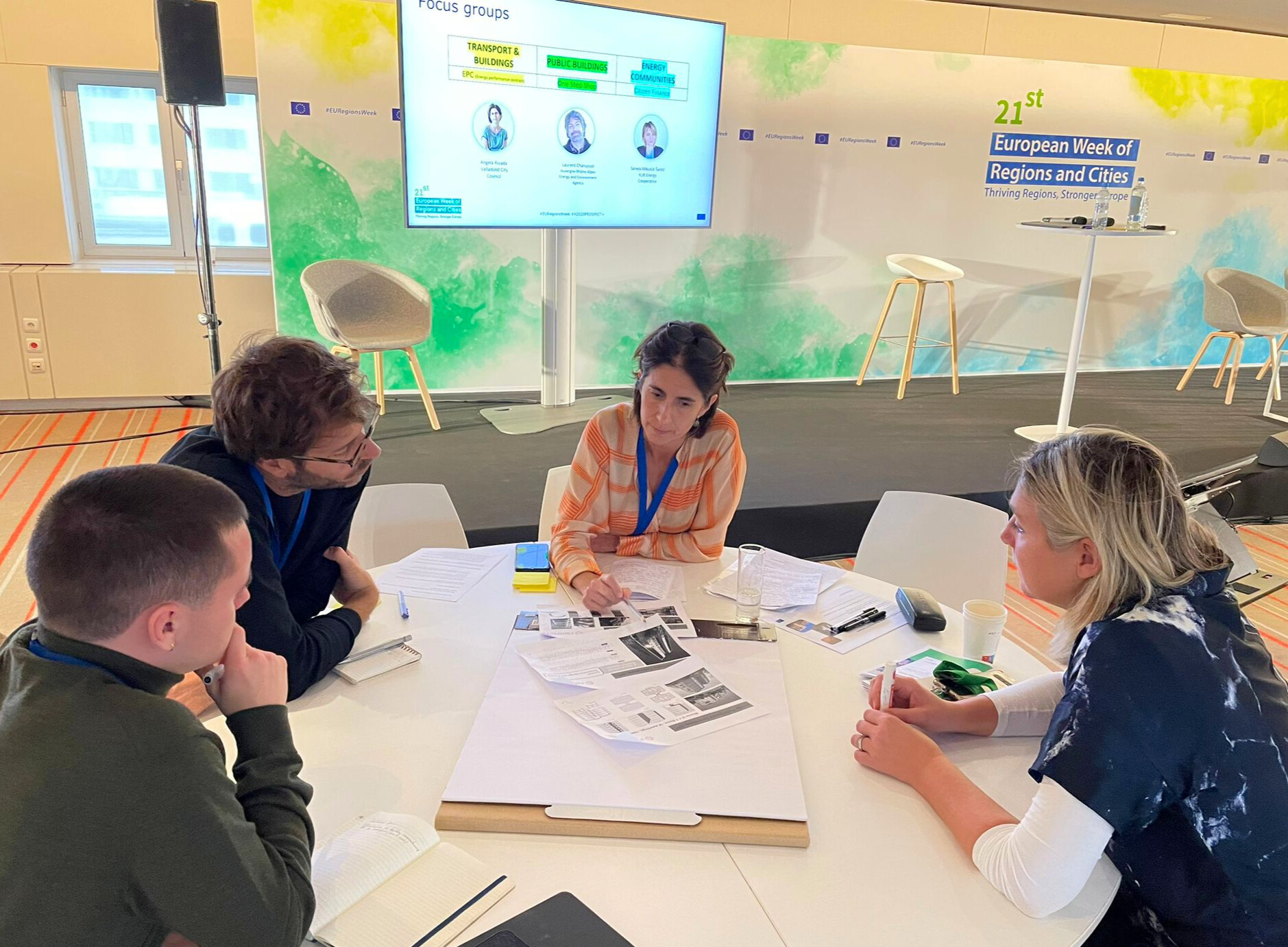
What we learned at the participatory lab
In conclusion, the key takeaways from the discussions underscore several crucial themes. Firstly, shared challenges across Europe reveal opportunities for collaboration and shared solutions among multiple countries. To address these challenges, there's a pressing need for concrete recommendations at both national and EU levels, aiming to unify financing opportunities for local authorities in all EU member states.
The complexity of urban planning processes, often likened to a "black box," highlights the necessity for more streamlined strategies. Prioritizing building renovations not only improves resident comfort but also yields economic benefits. Identifying and quantifying barriers is essential for a unified approach to these challenges.
Adequate funding and financing options are pivotal for implementing energy action plans and understanding the economic advantages of such processes. Setting up effective administrative groups and providing support to all municipalities, regardless of size, is critical. Rebuilding public trust in municipal investments and public-private partnerships is essential for their success.
Lastly, an emphasis on continuous engagement with community members, seeking feedback, and ensuring an open dialogue can pave the way for more successful sustainable development initiatives at the local level. These key takeaways collectively highlight the importance of cooperation, transparency, and innovative solutions in addressing the complex challenges of urban development and sustainability.
 Capacity building for cities and regions | PROSPECT+